Risky business: putting your hometown into a novel

My new novel, Little Sins, admittedly started out partly as an exercise in nostalgia as I have lived for many years a few thousand miles away from where I grew up. It was an enjoyable experience writing it and recalling those places that helped to shape me all those years ago. The very process of remembering in order to be able to describe in prose was a rediscovery for me in many ways.
I’m by no means the first novelist to utilize my hometown in writing. HP Lovecraft made ordinary houses in Providence terrifying. James Joyce put his characters into a meticulously drawn Dublin. And DH Lawrence and Emily Bronte set their dramas in the places they grew up in and knew well.
The subject matter I’ve injected (wholly fictitious I must add) is serious stuff: a local murder with subsequent suspicions falling upon some of the families in the town. The final product isn’t some cozy, rose-tinted retrospective of Rhode Island life in 1968, but instead a tightly focused snapshot of family realities that could be any town in New England or indeed America in the 1960s.

The more I wrote, the more I was drawn into conveying the very real differences in family life compared with today. Just a few tasters for those not old enough to remember: corporal punishment in the home was the norm. Sometimes just a smack, other times a leather strap or your dad’s belt. Those in Catholic schools could expect it there as well. Adults and children were less likely to question those in authority. Many moms were housewives first and foremost. And for most that meant obeying their husbands. Husbands wouldn’t question their doctors, clergy, or other social “betters”, deference still the order of the day.
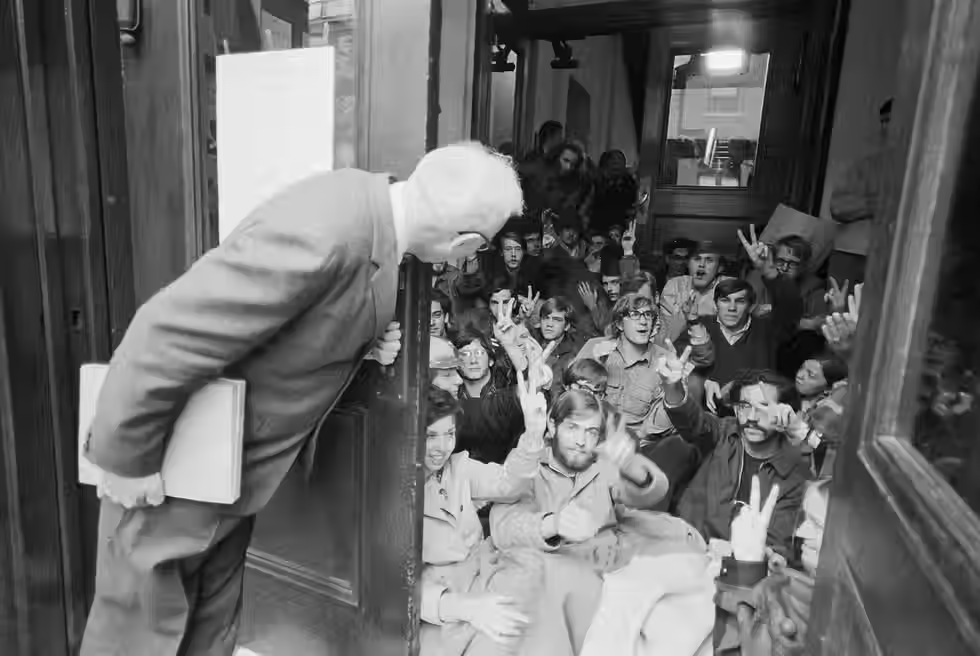
The teen rebellion of the era started to crack the existing order but the price for many families was disharmony, discord, and trauma. Add to that the growing tragedy of the Vietnam War sowing divisions across generations and dividing families and you have a pretty volatile mix.
The year 1968 seemed to be the apex of all that, a year of national turmoil. The funny thing is, at the time, the way you live seems absolutely normal. But that’s just it, what’s “normal” moves with the times. I hope I’ve managed to convey that too. The way the characters in my novel interact with each other may seem strange to modern readers, even misguided, but within the context of the times it’s just routine life.
I could have just created a fictitious town in Rhode Island. Stephen King does that to great effect for his native Maine and no doubt readers immediately go to Google Maps to locate Castle Rock, Derry, and Jerusalem’s Lot, so vivid are the pictures he paints. But for me, using my mind’s eye to go back to an actual place helped ground me in the story I was trying to tell. Anyone from around greater Providence and southeastern Massachusetts will probably smile at some of Little Sins as it triggers memories of their own from that area. But beyond that, I believe it’s a story that is universally American and of its time. Its true geography is the often difficult terrain that is ones own family.
Little Sins is out on 16 March


Comments